

Explain stealth behavior, screen-sharing boundaries, self-check flow, and what to verify before a live interview
Stealth Mode
Bottom line first
Stability is not only about the feature itself. It depends on whether you rehearsed on the same platform, with the same sharing mode, and with the same shortcut habits you plan to use in the real interview.
This page explains what stealth mode actually means, where its boundaries are, how to self-test it, and how to use it in a real interview without improvising under pressure.
One-sentence definition
The core idea is simple: you keep the app visible locally, and once the platform-specific sharing setup is enabled, the interviewer does not see the app window remotely. At the same time, the workflow minimizes switching, focus changes, and unnatural eye movement.
What stealth mode actually means
Visible locally, hidden from the interviewer remotely
In common interview and meeting screen-sharing scenarios, the app window can stay on your local screen so you can keep reading AI guidance, screenshot output, or Knowledge Base material. Once the platform-specific sharing setup is enabled, the interviewer does not see that window in the remote shared view. That is the core idea: usable locally, hidden remotely.
Use shortcuts instead of frequent window switching
You can keep the main interview or coding window in place and use global
shortcuts for capture, answer generation, view switching, and Cmd/Ctrl + B
to hide or show the app window.
Keep eye movement and behavior natural
Stealth is not only about whether the window leaks. It is also about
whether your behavior looks natural. Move the panel with Cmd/Ctrl + Arrow
so it stays near your main coding, prompt, or conversation area. That helps
reduce obvious eye drift and avoids sounding like you are reading answers
word for word.
Verify once on your real platform before using it live
Meeting apps, share modes, and OS versions do not all behave the same. One rehearsal on the exact target platform makes the live session much more reliable.
Why it reduces exposure risk in practice
Define the boundary clearly
The mechanism is straightforward: this is a native desktop app, not a browser extension. It combines system-level content protection, non-focusable shell windows, click-through / mouse-passthrough behavior, global shortcut registration, native keyboard-event interception, and hook-based handling for modifier-key paths.
Native desktop process, not a browser extension
The app runs as an independent desktop process. It does not need to inject itself into the interview page, and it does not rely on browser-extension APIs.
System-level content protection on the share path
The share path is handled at the OS window layer. You keep the content visible locally, while screenshots, recordings, and meeting-share output do not include the app window itself.
Non-focusable shell windows plus click-through behavior
The shell is designed not to steal focus, and mouse passthrough keeps your pointer in the real work area. That avoids the obvious blur, tab-switch, and window-switch pattern that interview platforms often watch for.
OS-level shortcuts, native event interception, and Dock/taskbar suppression
Capture, hide/show, and view switching are driven by OS-level shortcut registration instead of browser events. On macOS, native event-tap interception handles modifier-key and keyboard-event paths. Combined with focus-preserving windows, click-through / mouse-passthrough, Dock suppression, and taskbar suppression, the workflow stays outside the normal browser tab-switch pattern.
What you should see locally vs. what they should see remotely
| Scenario | What you usually see locally | What the remote shared screen should usually show |
|---|---|---|
| App window is open | AI guidance, screenshot output, Knowledge Base notes | Your coding editor, browser prompt, or the main content you intentionally share |
You press Cmd/Ctrl + B | The app window hides or comes back quickly | The shared screen should remain stable and should not suddenly expose the app window |
You press Cmd/Ctrl + 1 / 2 | The app switches between live transcription Q&A and screenshot Q&A inside the same window | The remote side should still only see the underlying shared content |
Important reminder
If your interview requires full-screen sharing, or if the platform was recently updated, test in self-check tools first and then run one verification round on the exact interview platform.
Extra Windows browser option
If the default desktop-client path already passed self-check but you still worry that a Windows browser page may capture keyboard events, continue with Windows Keyboard Guard Extension.
Recommended self-check order
Start a test meeting on the exact target platform
Use the same platform you expect in the real interview whenever possible, such as Zoom, Tencent Meeting, Feishu Meeting, or a browser-based interview room.
Observe the shared screen from a second device
Join from a phone, tablet, or another laptop. The real question is not whether the window is visible on your own machine, but whether it leaks into the remote shared feed.
Trigger the core shortcuts once in the live test
At minimum, test Cmd/Ctrl + H for capture, Cmd/Ctrl + Enter for answer
generation, Cmd/Ctrl + 1 / 2 for view switching, and Cmd/Ctrl + B to
hide or show the app window.
Use self-check tools for targeted detection checks
If you are worried about focus detection, share visibility, or keyboard behavior, use self-check tools for directed testing. The tools help you isolate problems, while a live meeting test validates the full workflow.
Repeat once in the setup closest to the real interview
Keep the same headphones, external displays, sharing mode, input method, window placement, and shortcut habits you plan to use later.
Common platforms and where to configure them
| Scenario | Recommended approach | Continue troubleshooting |
|---|---|---|
| Browser interview room or coding platform | Run self-check tools for sharing, focus, and shortcuts first, then verify once in a real test room | If your concern is Windows browser keyboard capture, continue with Windows Keyboard Guard Extension |
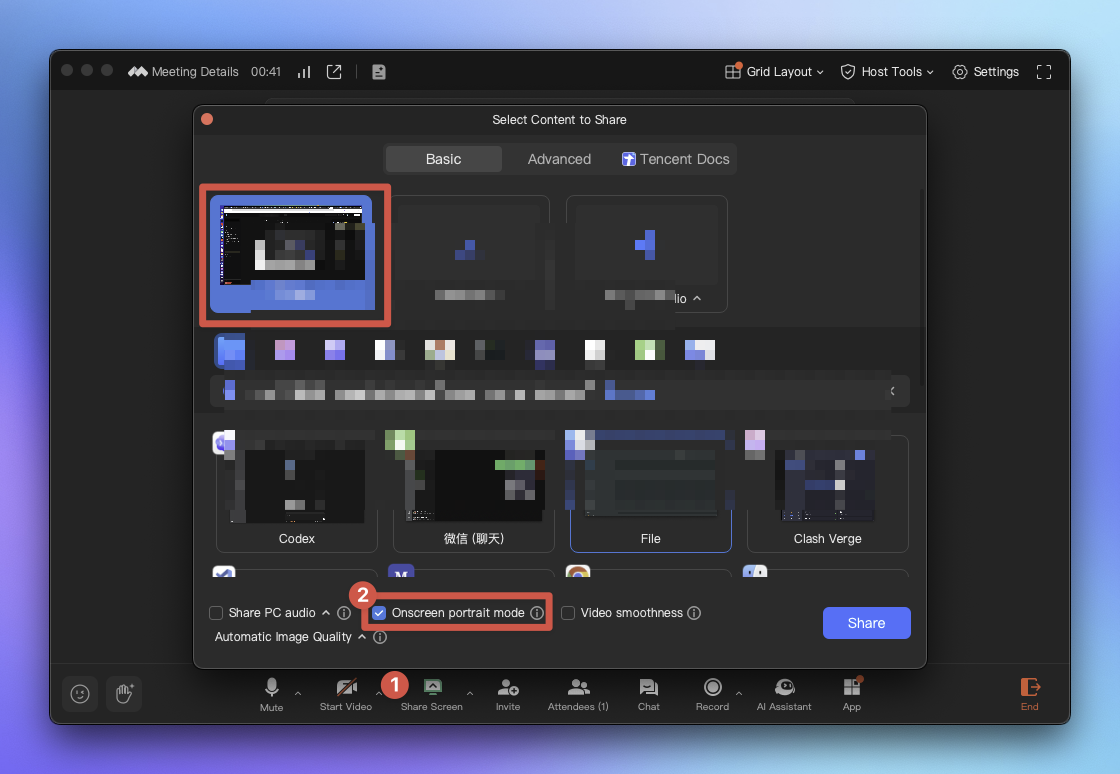
| Tencent Meeting | Prefer Smoothness Priority or the equivalent standard mode in your current version before testing remotely | See Tencent Meeting setup |
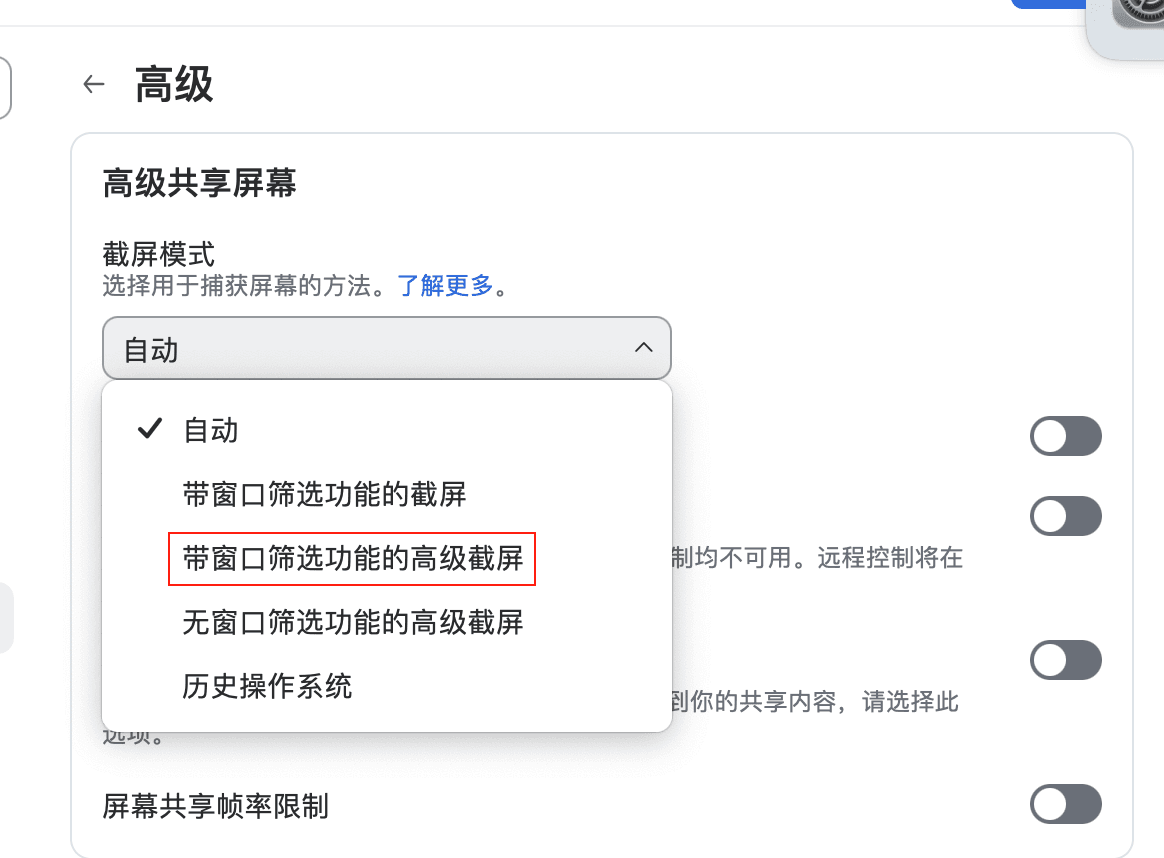
| Zoom | Enable Advanced Capture with Window Filtering before your remote rehearsal | See Zoom setup |
Common scenarios and the matching strategy
Screen sharing
Share only the window you actually need when possible, such as your editor, prompt page, or interview room, instead of defaulting to full-screen sharing.
Follow-up pressure
AI should give you an answer skeleton and live support, not a script. Reframe the structure, keywords, and examples in your own words so the delivery still feels natural.
Eye movement monitoring
Keep the window near your main coding or reading area. In practice,
unnatural eye movement is often more noticeable than the content itself.
Use Cmd/Ctrl + Arrow to reposition the panel when needed so you are not
stuck reading from one unnatural corner or delivering answers like a script.
Focus and tab checks
Try not to switch tabs or windows constantly. If you need to hide the app
briefly, use Cmd/Ctrl + B to hide or show the app window instead of
manually jumping around.
The 3 actions you will use most in practice
Share only what is necessary
Do not default to full-screen sharing. The less you expose, the easier it is to control the real output.
Use the hide / show app window shortcut instead of leaving the page
On Windows use Ctrl + B. On macOS use Cmd + B. This is smoother than
manually switching windows, and it is worth turning into muscle memory.
Move the panel to where your eyes naturally go
On Windows use Ctrl + ↑ / ↓ / ← / →. On macOS use Cmd + ↑ / ↓ / ← / →
to keep reading close to your actual workspace. This reduces awkward eye
drift and makes it easier to respond in your own words instead of sounding
like you are reading.
Sharing references
Know the boundaries in advance
- Re-test after OS or meeting-app upgrades.
- Multi-monitor setups, projection, and special browser sharing modes need extra verification.
- A hidden remote window does not automatically mean natural live behavior. Eye movement, pauses, and delivery still matter.
Pre-interview checklist
- Run one sharing test on the same platform you will use in the real interview, ideally with a second device checking the remote view.
- Rehearse hide / show app window:
Ctrl + Bon Windows,Cmd + Bon macOS. - Rehearse window movement:
Ctrl + Arrowon Windows,Cmd + Arrowon macOS. - Use self-check tools for one more pass on focus, share, and keyboard behavior.
- Keep a manual answering fallback so your interview flow does not collapse if you temporarily hide the panel.
If the live session feels unstable
- Hide the panel first instead of forcing more interactions.
- Keep the interview conversation moving and prioritize the human interaction.
- Reproduce the issue later in self-check tools or a test meeting room, then adjust sharing mode, window position, and shortcut habits.
Continue reading
Supported Platforms
Review how Zoom, Google Meet, Tencent Meeting, browser interview rooms, and coding platforms should be verified.
Keyboard Shortcuts [Must Read]
Review all default hide / show app window, movement, zoom, and workflow keys.
Basic Settings [Must Read]
Recheck permissions, layout, and shortcut readiness before a live session.
Common Platform Issues
Start here if your sharing behavior or platform compatibility feels off.
AI Reading Assistant
Send to your preferred AI
Smart Summary
Deep Analysis
Key Topics
Insights